

A Cane Corso puppy does not stay small for long. Within months, that bright-eyed puppy can become a powerful, athletic dog with a serious presence, deep loyalty, and a natural instinct to watch over the people he loves. That is exactly why learning how to prepare for a Cane Corso before bringing one home matters. The right preparation gives your puppy the structure to grow into the calm, stable, devoted family protector this remarkable breed is meant to be.
A premium Cane Corso deserves more than a bed, a bowl, and a few toys. He needs clear leadership, a secure environment, thoughtful socialization, and a household ready to make training part of everyday life.
Prepare Your Home for a Cane Corso
Cane Corsos are large, strong dogs, and their environment should reflect that reality. Start with containment. A secure, well-maintained fence is essential if your dog will spend time outdoors. Check gates, latches, weak fence lines, and any gaps a growing puppy could slip through. A Cane Corso should never be left to patrol a yard unsupervised for long periods. This breed thrives as part of the family, not as a dog kept outside.
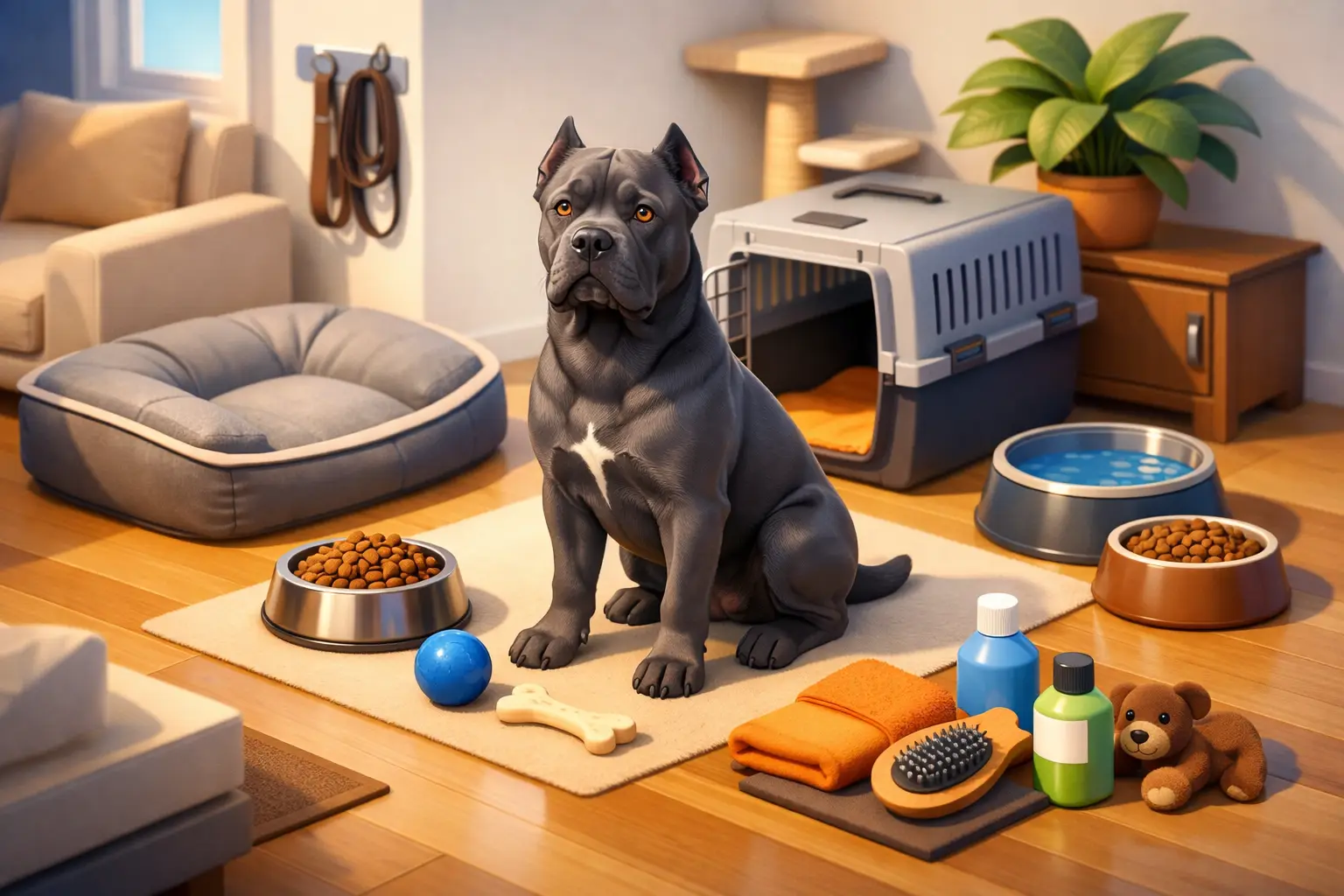
Inside, create a designated resting area in a quieter part of the home. A properly sized crate can be a valuable training tool when introduced positively, not used as punishment. It gives your puppy a safe place to settle, supports house training, and prevents unsupervised chewing while he is still learning the rules.
Remove easy hazards before puppy arrival. Secure cords, medications, cleaning products, small children’s toys, and anything valuable that could become a chew target. Puppies explore with their mouths, and a Cane Corso puppy has the strength to turn a minor household oversight into an expensive problem.
Flooring deserves consideration, too. Slippery surfaces can be difficult for a fast-growing, heavy-boned puppy. Area rugs or traction runners can help provide steadier footing in high-traffic spaces. Avoid encouraging repeated jumping from furniture, running up and down stairs, or intense impact exercise while your puppy is developing.
Make Sure Your Lifestyle Fits the Breed
A Cane Corso is not a low-engagement dog. He is deeply people-oriented and often wants to know where his family is, what they are doing, and whether everything is in order. The breed can be affectionate and gentle at home, but that calm confidence is built through consistency.
Before choosing a puppy, take an honest look at your schedule. Who will handle morning potty breaks, feeding, training, exercise, and midday care during the early months? Puppies cannot simply be brought home and expected to adapt to a busy household without guidance. They need frequent bathroom breaks, short training sessions, calm exposure to the world, and meaningful time with their people.
For families, establish rules before the puppy arrives. Decide whether the dog is allowed on furniture, which rooms are off-limits, how children should approach him, and who is responsible for feeding and training. Everyone does not need to train differently. In fact, mixed messages are one of the fastest ways to create confusion in a highly intelligent, strong-willed breed.
A Cane Corso can be an exceptional companion for the right home. He may not be the best fit for someone seeking a dog that is content with minimal interaction, inconsistent routines, or occasional obedience work. This is a breed that responds beautifully to engaged ownership.
Build a Training Plan Before Puppy Day
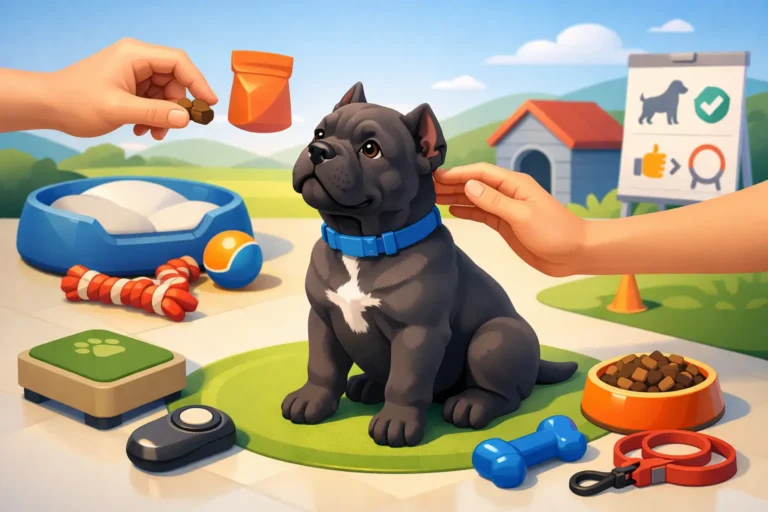
Training should begin the moment your puppy comes home. That does not mean harsh corrections or overwhelming drills. It means teaching simple expectations with confidence, repetition, reward, and fair boundaries.
Start with name recognition, house training, crate comfort, recall, leash manners, sit, down, place, and a reliable leave-it command. Keep sessions short and focused. A few minutes practiced several times throughout the day is more productive than one long session that leaves a young puppy tired or frustrated.
Leash training is especially important. A mature Cane Corso can outweigh many adults and has the physical power to pull hard if never taught otherwise. Teach your puppy that walking beside you is the default, not a negotiation. Do not wait until he is large enough to drag you down the driveway.
Professional guidance is a wise investment, particularly for first-time guardian-breed owners. Look for a qualified trainer who understands large working breeds and uses a balanced, structured approach appropriate for your dog and your goals. The goal is not to make your Cane Corso suspicious or aggressive. A well-bred, well-raised Corso should be stable, discerning, obedient, and confident under the direction of his family.
Never encourage protective behavior through rough play, teasing, or attempts to turn a puppy into a guard dog. True protection begins with sound temperament, correct socialization, and dependable obedience. A dog that is calm and controllable is far more valuable than one that reacts to every unfamiliar sound or person.
Socialization Is Not a Weekend Project
Socialization is often misunderstood. It is not about allowing every stranger to hug your Cane Corso puppy or taking him into chaotic situations before he is ready. It is about teaching him that new sights, sounds, surfaces, people, and environments can be observed calmly without fear or overexcitement.
During the early months, provide positive, controlled exposure to visitors, children, car rides, grooming, veterinary handling, friendly dogs, traffic sounds, hats, umbrellas, delivery activity, and different public environments where dogs are permitted. Keep experiences brief and successful. If your puppy is overwhelmed, create distance and let him regain composure rather than forcing interaction.
A Cane Corso does not need to greet everyone to be properly socialized. Many mature Corsos are naturally reserved with strangers. What matters is that your dog can remain composed, look to you for direction, and move through the world without unnecessary stress.
Invite guests into the home thoughtfully. Ask visitors to ignore the puppy at first and allow him to approach at his own pace. Teach children not to climb on him, pull his ears, disturb him while eating, or corner him in his crate. Respectful interaction protects both your dog and the people around him.
Budget for Quality Care, Not Just the Puppy
Bringing home a Cane Corso is a long-term commitment to an impressive, large-breed dog. Premium nutrition, routine veterinary care, parasite prevention, training, insurance or emergency savings, quality equipment, and boarding or pet care can add up quickly.
Large breeds also require appropriately sized supplies. Plan for a durable crate, sturdy leash and collar, secure harness if recommended by your trainer, raised or stable feeding setup if preferred, chew-resistant toys, grooming tools, and a bed built to support a growing body. Cheap equipment often fails when used by a determined, powerful dog.
Feeding deserves special attention. Rapid growth should be managed carefully with a high-quality diet suited to large-breed puppies and guidance from your veterinarian. Overfeeding does not create a better Cane Corso. Healthy, controlled growth helps support the joints, structure, and long-term mobility of a dog built for strength.
Set aside an emergency fund even if your puppy comes from carefully selected, health-conscious lines. Responsible ownership means being prepared for the unexpected, from a swallowed object to an after-hours veterinary visit.
Choose a Breeder Who Prepares You Too
The quality of your preparation is closely connected to the quality of the breeder you choose. A responsible breeder should be open about pedigree, health considerations, temperament, early care, and the expectations of Cane Corso ownership. They should want to know about your home, experience, lifestyle, and plans for the dog, not simply complete a transaction.
Look for puppies raised with purposeful early handling and age-appropriate socialization. The earliest weeks shape a puppy’s transition into family life, and conscientious breeders build a foundation that new owners can continue. At King Corso Kennel, that foundation is rooted in selective breeding, family-centered raising, and the pursuit of strong, stable Cane Corsos worthy of their lineage.
Ask questions about the parents’ temperaments, size, health screening, daily routine, feeding schedule, and the puppy’s individual personality. A confident breeder will help match you with a puppy whose temperament and energy fit your household. The biggest puppy in the litter is not automatically the right puppy for every family.
Prepare for the First Week, Not Just the First Day
The first week should be calm, structured, and intentionally uneventful. Avoid a parade of visitors, crowded outings, and too much freedom in the house. Let your puppy learn where he sleeps, where he eats, where he goes potty, and who his family is.
Keep a simple routine: potty break, meal, quiet play or training, rest, and repeat. Puppies need significant sleep, and an overtired Cane Corso puppy can become mouthy, wild, or difficult to settle. Scheduled rest is not a luxury. It is part of raising a well-balanced dog.
Document your puppy’s feeding, bathroom habits, training progress, and veterinary appointments during the first few weeks. This helps you spot changes quickly and makes it easier for every family member to stay consistent.
Your Cane Corso will grow into the standards you set early. Give him patient leadership, meaningful work, calm exposure, and the security of knowing his family is steady. In return, you will have the privilege of raising a loyal companion whose presence brings both strength and unmistakable peace of mind.